The building at Schulerstraße 10 has stood there for 262 years. Its history dates back to the late Middle Ages, when it served as lodging for the clergy of the neighboring St. Stephen’s Cathedral. It later became the inn “Zur Weißen Rose” before being converted into a hotel during the Austro-Hungarian Empire.

The history of the house
In the footsteps of fime
Over the centuries, the house has undergone many changes without losing its character. Some traces are still visible today, while others can be found in old documents, anecdotes, symbols, and the people who have stayed here.
-
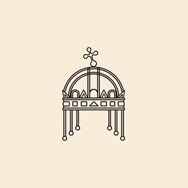
The crown
Our hotel’s emblem features the Crown of St. Stephen—the historic symbol of sovereignty with which the kings of Hungary were crowned for centuries. To this day, it serves as a reminder of the time when the hotel became the Viennese residence of Hungarian nobles and magnates and eventually received the name it still bears today: King of Hungary.
-
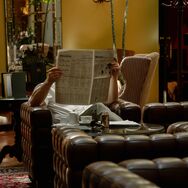
The guests
What makes a place like the König von Ungarn so special? Is it the location? The history? The Mozartstüberl or the inner courtyard? We believe it’s the people who have come and gone here for centuries. Among them were Wolfgang Amadeus Mozart, Franz Kafka, and Anton Bruckner—as well as the many guests whose names hardly anyone knows and who continue to shape the place to this day.
-
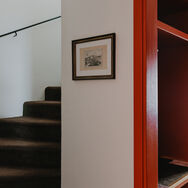
The town
The Hôtel König von Ungarn is located just a few steps behind St. Stephen’s Cathedral. And yet, here on Schulerstraße, the city’s pace seems to slow down. Everything is a little quieter, the pace more leisurely, the noise more subdued. Schulerstraße is one of Vienna’s oldest streets. It has been part of the city’s historic center since the middle ages.

Our Guestbook
Anyone who flips through our guestbook will come across some big names. Among them are Franz Kafka, Anton Bruckner, Wolfgang Amadeus Mozart, of course, and Agnes Baltsa. But you’ll also encounter the many people in between: regulars and travelers passing through, clergy and adventurers, well-traveled guests and neighbors. Together, they tell the story of a house that has been welcoming guests for centuries.
This guest book is a historical document, spanning from the Habsburg era to the present day, preserved unchanged and in its entirety. It contains entries from the period of National Socialism featuring symbols and beliefs that we condemn in the strongest possible terms. Preserving history also means confronting it. In doing so, we hope to make our contribution against forgetting.

FAQ
You may have some questions before your trip. We've answered the most common ones here.
-
How long has the Hotel König von Ungarn been around?
-
Where does the name “König von Ungarn” come from?
The name dates back to the time when the hotel became the Viennese residence of Hungarian nobles and magnates, some of whom lived here for years. The Crown of St. Stephen in the hotel’s emblem still serves as a reminder of that era today.
-
Which famous guests have stayed at the King of Hungary?
Among the most famous names in the guestbook are Wolfgang Amadeus Mozart, Franz Kafka, and Anton Bruckner. Just as influential are the many guests whose names are hardly known to anyone, but who continue to shape the character of the house to this day.
-
Where exactly is the Hotel König von Ungarn located in Vienna?
The hotel is located on Schulerstraße, just a few steps behind St. Stephen's Cathedral, right in the heart of Vienna's historic center. Since the Middle Ages, this street has been one of the oldest in the city.
-
Has the house been altered over the centuries?
Yes, over the centuries, the house has undergone many changes without losing its character. Some traces of this history are still visible today, while others can be found in old documents, anecdotes, and the people who have stayed here.